1. Overview
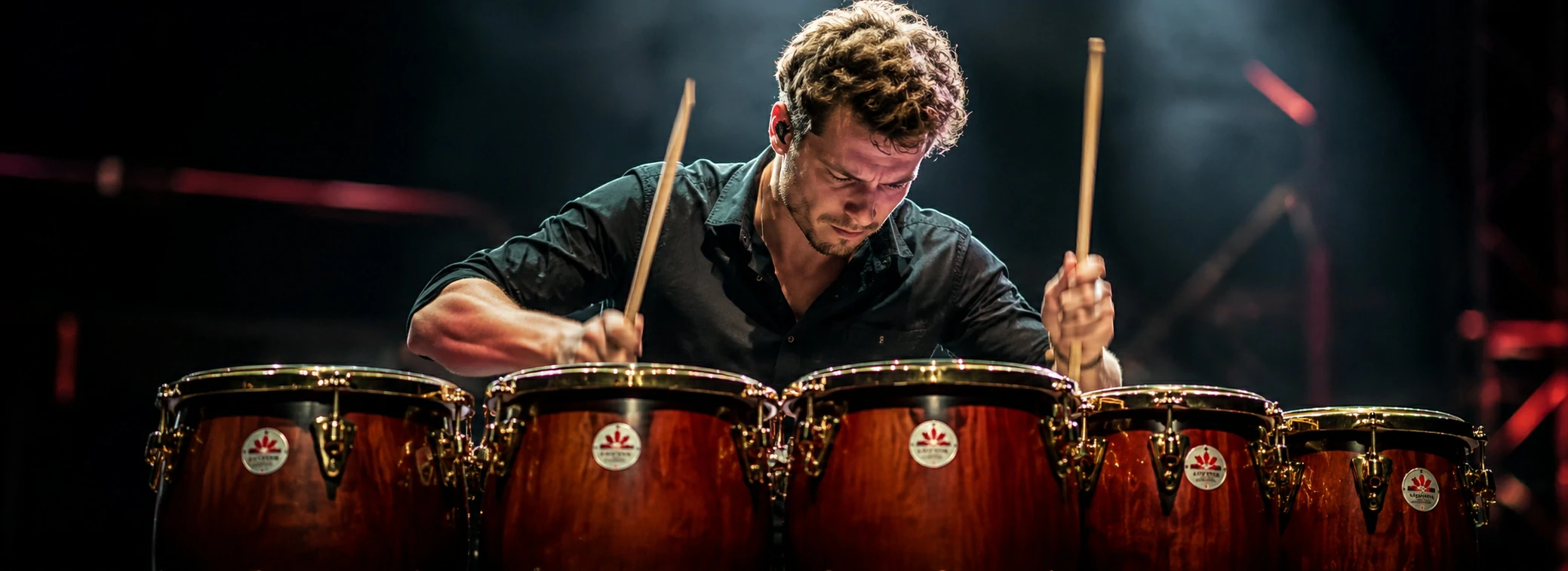
The Wuyin Pai Gu (Five-Tone Rack Drums) occupies a unique position on the modern Chinese orchestra stage. It is both a rhythmic powerhouse and a melodic voice. Selecting the right instrument for a specific stage environment and mastering the techniques to project within a theatrical setting are critical for a successful performance. This guide provides a professional framework for choosing a stage-ready Pai Gu and optimizing its performance through technique, setup, and acoustics.
2. Stage Selection Criteria: Choosing the Right Instrument
The "best" Pai Gu is not a universal standard; it is the one that best fits the acoustic and logistical demands of the venue.
2.1 Specification and Range Selection
Standard 5-Drum Configuration: The default choice for most orchestral works. It typically covers a range from a low G (or C) up to a high D (or A), providing sufficient melodic scope for traditional and contemporary repertoire.
Extended 7-Drum Configuration: Recommended for soloists or modern compositions that demand a wider range (up to two octaves). On stage, the expanded setup offers more coloristic options but requires more physical space and a wider stance.
Diameter Selection:
Standard (Group A): Approx. 20 / 23 / 26 / 29 / 32 cm. Offers the best balance of agility and fullness for a standard concert hall.
Compact (Group B): Approx. 18 / 20 / 23 / 26 / 29 cm. Better for smaller stages, chamber ensembles, or players with a smaller reach.
Full-Body (Group C): Approx. 23 / 26 / 29 / 32 / 35 cm. Provides more low-end weight, suitable for large halls or outdoor stages where projection is paramount.
2.2 Material Selection for Stage Reliability
The stage environment is unpredictable; your instrument must be reliable.
Shell Material:
Multi-Ply Laminated Wood (Recommended): The industry standard for stage use. It offers superior dimensional stability, resisting warping caused by stage lights, travel, and humidity changes. Sonically, it provides a consistent, focused projection.
Solid Hardwood (Premium): Offers a warmer, more complex tone but is more sensitive to climate. Best for controlled indoor venues.
Head Material:
Natural Water Buffalo Hide (Standard): The professional choice for its rich, organic tone. However, it requires careful monitoring and tuning on stage.
Synthetic Heads (Specialized Use): Ideal for outdoor festivals, high-humidity regions, or situations where tuning stability is more critical than traditional timbre. They are virtually immune to weather changes.
2.3 Rack and Hardware Selection
Stability is Paramount: Choose a rack with a wide tripod or quad-pod base. Outrigger legs are essential for preventing tips during vigorous playing.
Adjustability: A professional stage rack must allow for independent height and angle adjustment for each drum. This allows the player to optimize ergonomics for different pieces during a performance.
Memory Locks: These are crucial for quick, consistent setup. They allow the player to mark their preferred settings, ensuring the instrument returns to the exact same position after transport or storage.
3. Performance Essentials: Technique for the Stage
Playing on stage requires a different approach than practicing in a studio. The goal is to project sound and emotion to the audience while staying in sync with the ensemble.
3.1 Ergonomics and Setup
The "Sweet Spot" Height: Adjust the rack so the center drum is at your elbow height when standing naturally. This allows for maximum leverage and control without straining your wrists or shoulders.
Optimal Angle: Tilt the drums slightly backward (10–15 degrees). This directs the sound towards the audience and allows for better rebound, reducing the risk of sticks getting stuck in the head.
Spacing: Arrange the drums so there is a fist-width of space between them. This prevents accidental strikes on adjacent drums and allows for clean, fast transitions.
3.2 Stick Technique and Projection
The Full Stroke: On stage, a full, controlled stroke is often necessary to project. Use your entire arm and wrist, not just your fingers. Let the stick rebound naturally to produce a full, singing tone.
Controlled Articulation: For softer passages, use a "controlled stroke" where the stick returns to a playing position immediately after striking, rather than bouncing freely. This creates a more intimate, contained sound.
Dynamic Contrast: The Pai Gu is capable of extreme dynamics. Practice moving from a whisper-soft pianissimo to a thunderous fortissimo without losing control or pitch clarity. On stage, this contrast is amplified and becomes a powerful storytelling tool.
3.3 Tuning and Intonation for the Hall
Acoustic Tuning: A drum tuned perfectly in a small room may sound flat in a large hall. Before a performance, tune the set slightly sharp to compensate for the hall's acoustic properties.
Interval Consistency: Ensure the intervals between the drums are pure. On stage, a slightly out-of-tune interval will be painfully obvious to the audience. Use a tuner, but trust your ears for the final blend.
Environmental Check: If playing under hot stage lights, check the tuning again after 10–15 minutes of warm-up. The heat will tighten the heads and raise the pitch.
3.4 The Art of the Roll (Controlled Sustain)
The roll is the Pai Gu’s signature technique for sustaining a pitch.
Open Roll (Multiple Bounce): Allow the stick to bounce several times on the head to create a continuous, shimmering sound. This is used for building tension or creating a sustained melodic line.
Controlled Roll (Double Stroke): Alternate hands rapidly with controlled strokes. This produces a more articulate, rhythmic roll, ideal for driving the tempo forward.
Dynamic Rolls: Practice crescendos and diminuendos within a roll. Starting a roll softly and swelling to a climax is one of the most effective ways to captivate an audience.
4. Stagecraft and Communication
4.1 Visual Presence
Posture: Stand tall with your shoulders back. Your physical presence communicates confidence and authority. Avoid slouching or leaning on the rack.
Movement: Your movements should be purposeful. Large, expressive gestures can enhance the music, but fidgeting or unnecessary movements can distract the audience.
4.2 Communication with the Conductor and Ensemble
Eye Contact: Maintain frequent eye contact with the conductor, especially during tempo changes or transitions.
Listening: The Pai Gu is part of a larger texture. Listen to the other sections (strings, winds, brass) to ensure you are blending and supporting the overall sound, not overpowering it.
4.3 Dealing with Stage Monitors and Sound Reinforcement
If the performance is amplified, work with the sound engineer to find the optimal microphone placement.
Avoid "playing to the mic." Trust your technique and let the sound system do its job. Overplaying for the microphone can lead to a harsh, unbalanced mix.
5. Summary Checklist for the Stage
Category | Key Action |
|---|
Selection | Choose laminated wood for stability; select appropriate diameter for venue size. |
Setup | Set height to elbow level; angle drums 10–15°; use memory locks. |
Tuning | Tune slightly sharp for the hall; check after warm-up under lights. |
Technique | Use full strokes for projection; master dynamic rolls; control articulation. |
Stagecraft | Maintain good posture; keep eye contact with conductor; listen to the ensemble. |
6. Conclusion
Performing the Wuyin Pai Gu on stage is a holistic endeavor that combines instrument selection, technical mastery, and theatrical awareness. By choosing a stable, well-crafted instrument and employing techniques that prioritize projection, dynamic control, and clear communication, a performer can transform the five drums from a percussion set into a commanding melodic voice. The stage is not just a platform for playing notes; it is a space for telling stories through rhythm and tone, and the Pai Gu is uniquely equipped to do so with power and grace.