1. Overview
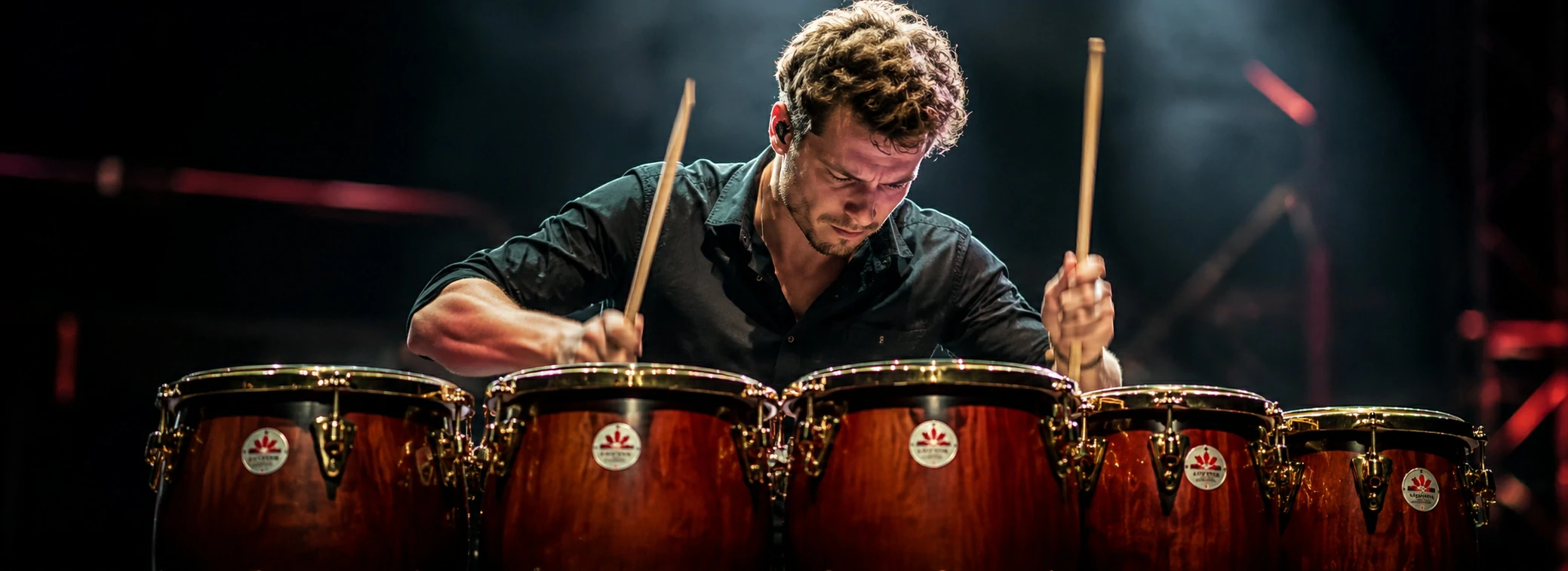
The Huapen Gu (Flowerpot Drum), distinguished by its flared, flowerpot-shaped body, holds a unique and elevated position in the Chinese folk music ensemble (Minzu Yuetuan). While the Da Tanggu provides raw power and the Biangu offers crisp articulation, the Huapen Gu serves as the primary melodic and expressive drum. Its design—wider at the top and narrower at the base—creates a long, controlled sustain and a deep, singing resonance that allows it to function not just as a rhythmic timekeeper, but as a lyrical voice capable of weaving through the texture of strings and winds.
2. The Core Role: The "Singing" Drum
The fundamental role of the Huapen Gu is to provide tonal color and melodic contour.
Sustaining the Resonance: Unlike the flat, short-decay sound of the Biangu, the Huapen Gu’s curved shell acts as a resonating chamber that prolongs the note. This "bloom" allows the drum to sustain pitches in a way that mimics the sustained notes of the Erhu or Suona.
Bridging Rhythm and Melody: It occupies the middle ground between the unpitched power of the Tanggu and the high-pitched clarity of the Xiaogu. It is the instrument most often called upon to play melodic phrases, arpeggios, and scales within the percussion section.
Dynamic Sculpting: The Huapen Gu is the master of the crescendo and diminuendo. Its ability to swell from a whisper to a roar makes it the primary tool for building dramatic tension and releasing emotional climaxes in folk narratives.
3. Key Scenario 1: The Shandong Drum-Suona Ensemble (Lu-Style)
In the robust and celebratory folk music of Shandong province, the Huapen Gu is the rhythmic and tonal anchor of the Lu-style drum and Suona ensemble.
Function: To match the raw, penetrating power of the Suona while providing a melodic counterpoint.
Technique: The drummer employs heavy, full-arm strokes and aggressive open rolls. The Huapen Gu’s deep resonance fills the sonic space between the piercing high notes of the Suona.
Musical Effect: The interaction creates a "call and response" texture. The Suona wails a melody, and the Huapen Gu answers with a thunderous, rhythmic-melodic phrase that grounds the music in a primal, earthy pulse. It is the sound of celebration, harvest, and communal joy.
4. Key Scenario 2: Jiangnan Silk and Bamboo (Sizhu) Accompaniment
In the softer, more lyrical string and wind ensembles of southern China (Jiangnan), the Huapen Gu takes on a more nuanced, supportive role.
Function: To provide structural punctuation and gentle rhythmic propulsion without overpowering the delicate textures of the Dizi (bamboo flute) and Pipa (lute).
Technique: Players use soft to medium felt mallets and controlled wrist strokes. The emphasis is on legato rolls and quiet, precise accents. The drummer often uses the "edge" of the head to produce a brighter, less booming tone.
Musical Effect: The Huapen Gu acts like a soft pillow of rhythm. It supports the swaying, lyrical lines of the melody instruments, adding weight and gravity to cadences. It is the sound of flowing water, gentle breezes, and refined elegance.
5. Key Scenario 3: Modern Chinese Orchestral Works (Symphonic Adaptation)
In the context of the modern Chinese orchestra, the Huapen Gu has evolved into a virtuosic solo instrument.
Function: To serve as a featured soloist or to engage in complex dialogues with the Western-influenced string and woodwind sections.
Technique: Utilizing the full range of the drum’s dynamic and tonal capabilities. This includes rapid melodic scales across the head, pitch bending (by applying pressure to the head with the hand), and extreme dynamic contrasts. The player treats the drum with the same expressive intent as a cello or oboe.
Musical Effect: The Huapen Gu provides a "primitive" or "organic" voice that contrasts with the more polished tones of the orchestra. It is used to evoke ancient landscapes, heroic struggles, or deep introspection. Its ability to sustain a pitch allows it to hold its own against a full orchestra, creating moments of profound dramatic tension.
6. Comparative Summary of Roles
Scenario | Primary Role | Technique Focus | Sonic Character |
|---|
Shandong Folk | Rhythmic Anchor / Power | Heavy strokes, open rolls | Deep, thunderous, earthy |
Jiangnan Sizhu | Textural Support / Pulse | Soft mallets, legato rolls | Gentle, warm, flowing |
Modern Orchestra | Melodic Soloist / Voice | Scales, pitch bends, dynamics | Expressive, singing, dramatic |
7. Conclusion
The Huapen Gu is far more than a background rhythm instrument; it is the heartbeat and the voice of the Chinese folk ensemble. Whether driving the energetic dances of Shandong, cushioning the elegant melodies of Jiangnan, or soaring as a soloist in a modern symphony, its core function remains consistent: to transform rhythm into melody and impact into emotion. Its flared body is not just a structural curiosity—it is the architectural secret behind its ability to sing, making it an indispensable pillar of Chinese musical expression.