Differences Between the Wuyin Pai Gu, Tanggu, and Huapen Gu

Release time :2026-07-28 09:52:11 Hits :4

1. Overview

The Wuyin Pai Gu, Tanggu, and Huapen Gu​ are three major membranophone instruments in the modern Chinese percussion family. While they share cultural lineage and visual similarities, they differ fundamentally in construction, pitch properties, performance technique, and musical function. Understanding these distinctions is essential for performers, composers, and educators.

2. Structural and Morphological Differences

Wuyin Pai Gu

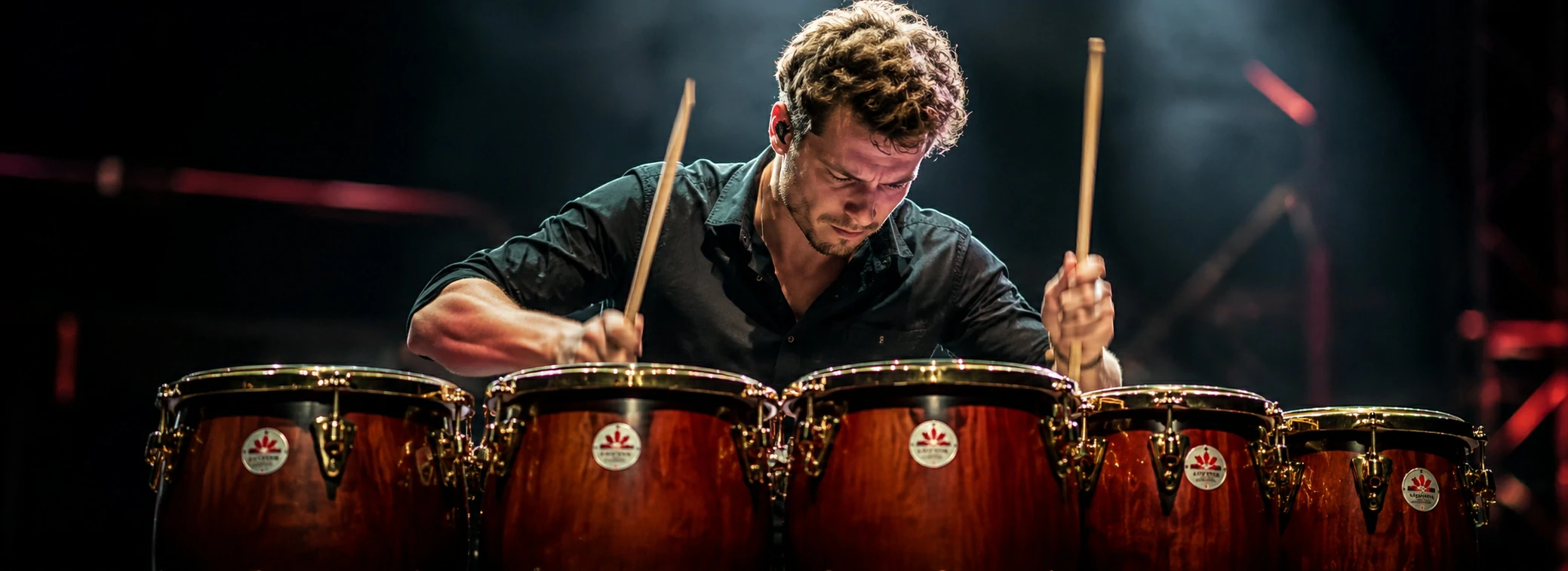
  • A composite instrument consisting of five individually tuned drums​ mounted on a single adjustable rack.
  • Each drum features a straight cylindrical or slightly tapered wooden shell, generally smaller in diameter than a full-sized Tanggu.
  • The rack allows for ergonomic positioning, with adjustable height and tilt for each drum.
  • Modern versions typically employ mechanical lug tuning​ for precise pitch control.

Tanggu (Da Tanggu)

  • A single large barrel drum​ with a straight cylindrical wooden body.
  • Diameters commonly range from 40 cm to over 80 cm; depth is usually proportional to the head diameter.
  • Traditionally rope-tuned, although modern iterations may use mechanical tension systems.
  • Mounted on a broad cradle or heavy-duty stand rather than a multi-drum rack.

Huapen Gu

  • Distinguished by its flared, flowerpot-like silhouette: wider at the batter head and tapering toward the base.
  • Typically a single, large-format drum, with diameters often between 55 cm and 65 cm at the top head.
  • The curved profile influences internal air resonance and low-frequency projection.
  • Also mounted on a dedicated stand, but structurally distinct from both the straight-barrel Tanggu and the multi-drum Wuyin Pai Gu.
Visual Summary
  • Wuyin Pai Gu:​ Multiple mid-sized drums on one rack.
  • Tanggu:​ One straight cylindrical barrel drum.
  • Huapen Gu:​ One flared, flowerpot-shaped body drum.

3. Pitch Characteristics and Tonal Profile

Wuyin Pai Gu

  • Definitely pitched.​ The five drums are tuned to a pentatonic or diatonic scale, enabling melodic and harmonic performance.
  • Each drum produces a clear, defined pitch; intervals can be fine-tuned via head tension.
  • Functions as a melodic-rhythmic hybrid, comparable in concept to timpani or chromatic toms.

Tanggu

  • Fundamentally unpitched or loosely pitched.
  • Generates a powerful low-frequency impact without precise tonal definition.
  • Musical role centers on rhythm, accent, and dramatic emphasis​ rather than pitch accuracy.
  • Even when tuned, its primary function remains percussive rather than melodic.

Huapen Gu

  • Produces a deep, resonant low register​ with pronounced sustain.
  • While not used melodically in traditional contexts, its curved shell enhances harmonic bloom and decay.
  • Primarily a color and texture instrument, valued for swelling rolls and atmospheric effects rather than defined pitch.
Pitch Comparison
  • Wuyin Pai Gu:​ Pitched, melodic capability.
  • Tanggu:​ Unpitched, rhythmic emphasis.
  • Huapen Gu:​ Deeply resonant, unpitched, with extended sustain.

4. Performance Technique and Player Role

Wuyin Pai Gu

  • Played with two matched sticks, executing scalar passages, arpeggios, and cross-drum rhythmic figures.
  • Techniques include controlled rolls, dampening, accents, and rapid lateral movement.
  • Requires pitch sensitivity and melodic literacy, bridging percussion and melodic instrumental technique.
  • Common in Chinese orchestras, solo repertoire, and cross-genre fusion.

Tanggu

  • Played with heavy, often felt-covered beaters, emphasizing weight, attack, and projection.
  • Focus lies on stroke intensity, roll control, and rhythmic precision.
  • Integral to opera ensembles, folk percussion, and ceremonial music.
  • The performer’s role is that of a rhythmic anchor and dynamic driver.

Huapen Gu

  • Played similarly to the Tanggu but exploits its sustaining resonance.
  • Techniques emphasize dynamic swells, long rolls, and textural nuance.
  • Frequently used in modern orchestral works for expressive low-end color and dramatic buildups.
  • The performer balances rhythmic articulation with tonal shaping and decay control.

5. Ensemble Function and Repertoire Context

Instrument
Primary Role
Typical Contexts
Wuyin Pai Gu
Melodic-rhythmic percussion
Chinese orchestra, solo concertos, contemporary fusion, pedagogy
Tanggu
Rhythmic foundation and impact
Opera, ritual music, folk ensembles, outdoor ceremonies
Huapen Gu
Tonal color and low-end texture
Symphonic Chinese orchestra, expressive passages, cinematic scoring

6. Practical and Logistical Considerations

  • Portability:​ The Wuyin Pai Gu’s rack system facilitates transport but requires careful setup; the Tanggu and Huapen Gu are heavier and bulkier as single units.
  • Tuning Stability:​ Mechanical tuning on the Wuyin Pai Gu offers consistency; rope-tuned Tanggu and Huapen Gu are more sensitive to humidity and temperature.
  • Maintenance:​ All three require climate-conscious care, but the Wuyin Pai Gu’s multi-head system demands more frequent pitch checks.

7. Summary Table

Feature
Wuyin Pai Gu
Tanggu
Huapen Gu
Structure
Five drums on a rack
Single straight barrel
Single flared body
Pitch
Definitely pitched
Unpitched / loose pitch
Unpitched, deep resonance
Function
Melodic + rhythmic
Rhythmic anchor
Tonal color / texture
Technique
Scales, rolls, dampening
Heavy strokes, rolls
Sustained rolls, swells
Common Use
Orchestra, solo, fusion
Opera, ritual, folk
Orchestral color, solos

8. Conclusion

The Wuyin Pai Gu, Tanggu, and Huapen Gu​ occupy distinct niches within Chinese percussion:
  • The Wuyin Pai Gu​ is a melodic-rhythmic instrument, unique in its pitched multi-drum configuration.
  • The Tanggu​ serves as the rhythmic backbone, delivering unpitched power and drive.
  • The Huapen Gu​ provides expressive low-end resonance, bridging rhythm and tonal atmosphere.
Recognizing these differences enables informed decisions in composition, arrangement, instrumentation, and education, ensuring each instrument is employed to its fullest artistic potential.