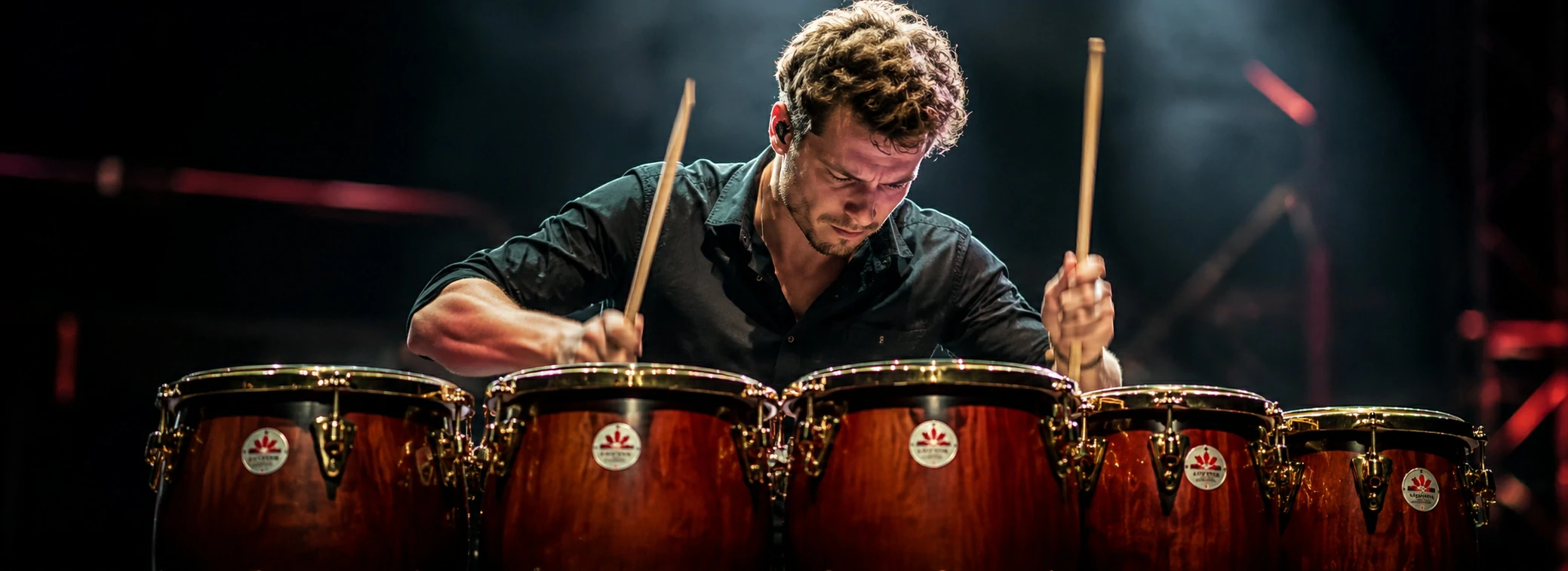
The Gaoyin Tanggu commonly referred to as the Xiao Tanggu (Small Hall Drum), is the highest-pitched member of the Chinese Tanggu family. Characterized by its smaller diameter (typically 20–30 cm / 8–12 inches, though sometimes up to 35 cm) and relatively shallow or proportionally balanced depth, it produces a bright, crisp, and penetrating sound. Unlike the deep, resonant Da Tanggu, the Gaoyin Tanggu excels in agility, articulation, and cutting through dense textures (e.g., gongs, cymbals, winds). Selecting the right one requires balancing size, material, head quality, tuning system, and intended use. This guide provides a structured approach to purchasing a Gaoyin Tanggu.
2. Determine the Purpose and Context
Before examining specs, clarify how and where the drum will be used:
Chinese Orchestra / Professional Ensemble: Needs authentic timbre, stable tuning, and balanced brightness. Prefer solid/high-grade laminated wood + buffalo hide + mechanical lugs.
Opera (Jingju, Kunqu, Regional): Requires projection, articulate attack, and traditional aesthetic. May favor slightly thinner heads for crispness; rope-tuned options exist but mechanical is more practical.
Folk / Outdoor / Lion Dance: Prioritizes durability, volume, and weather resistance. Thicker heads, reinforced hardware, possibly synthetic heads.
Education / Beginner: Cost-effectiveness, durability, ease of tuning. Laminated wood, synthetic or mid-grade hide, simple but stable stand compatibility.
Solo / Advanced Study: Highest material and craftsmanship standards; attention to overtone control and finish.
3. Size Selection (Diameter and Depth)
3.1 Diameter
~20–25 cm (8–10"): Very high pitch, extremely crisp, fast decay. Ideal for chamber, practice, or ornamental playing. Can be too thin for large ensembles.
~25–30 cm (10–12"): The standard professional range for Gaoyin Tanggu. Bright but with a little more body; versatile for orchestra and opera.
~30–35 cm (12–14"): Approaches mid-range; fuller tone, more low-mid presence, still bright. Good if the ensemble lacks a medium Tanggu or needs a “high-but-full” voice.
Note: Always confirm whether the manufacturer numbers from smallest (No.1 high) or largest (No.1 low); sizes can vary by workshop.
3.2 Depth (Shell Height)
Shallower depths emphasize brightness and quick decay.
Deeper shells (even in small diameters) add slight sustain and fullness but may reduce extreme crispness.
For Gaoyin Tanggu, depth is usually proportional; check that the ratio feels balanced (not overly squat or excessively tall for the diameter).
Tip: If possible, test-play or listen to audio samples of the same diameter with different depths to hear the sustain difference.
4. Shell (Body) Material and Construction
4.1 Solid Hardwood
Types: Chunmu (Ailanthus), birch, oak, occasionally walnut/rosewood.
Pros: Warm, complex resonance; traditional aesthetic with lacquer finish; preferred for concert use.
Cons: More sensitive to humidity; quality depends on seasoning (moisture content ~8–12%); price higher.
Check: No cracks, warping, or uneven joints. Mortise-and-tenon joints are a sign of higher craftsmanship.
4.2 Multi-Ply Laminated Wood
Types: Cross-laminated birch, maple, poplar (6–10 ply).
Pros: Dimensional stability, consistent roundness, durable, often more affordable; good for varying climates and institutions.
Cons: Slightly less complex overtone structure than premium solid wood, though high-end ply can be excellent.
Check: Smooth interior/exterior, no delamination, precise bearing edges.
4.3 Synthetic (Fiberglass/Composite)
Rare for traditional Gaoyin Tanggu but exists for outdoor/parade. Very durable, weatherproof, but acoustically brighter and less “woody.”
Decision: Choose solid wood for authentic tone in controlled environments; laminated for stability and general use; synthetic only for harsh conditions.
5. Drumhead (Membrane) Quality

5.1 Material
Water Buffalo Hide: The gold standard. Dense, thick (for small drums often 1.5–2.5 mm), with strong fundamental and controlled overtones. Look for uniform thickness, no deep scars, and smooth (but not over-processed) surface.
Cow Hide: Softer, sometimes used for slightly mellower high drums; less common in pro settings.
Synthetic (PET/Mylar): Stable, bright, moisture-proof. Good for education/outdoor but lacks organic complexity.
5.2 Processing and Fit
Uniformity: Hold hide to light (if loose) to spot thin spots. Edges should be evenly tucked into the flesh hoop.
Flesh Hoop: Securely set, concentric, no slippage. For pre-mounted heads, check that the hoop is not warped.
Pre-Tension Test (if possible): Tap center and edge; should hear clear pitch without flabbiness or dead spots.
Note: Many drums are sold with heads already mounted. Ask if the head is hand-selected or batch-processed; consistency matters across a set if buying multiple sizes.
6. Tuning System
6.1 Mechanical Lug Tuning (Recommended)
Features: Metal lugs, tension rods, counterhoops. Allows precise, repeatable tuning.
Check:
Lugs aligned, threads clean, no burrs.
Hoops perfectly round, holes aligned.
Rods turn smoothly; include a matching drum key.
Number of lugs (6–8 typical for small drums) sufficient for even tension.
6.2 Rope Tuning (Traditional)
Features: Rope/leather lacing. Authentic but hard to tune precisely; sensitive to humidity.
Check: Ropes even, no fraying; flesh hoop seated well; toggle/wrench included if sold as set.
Suitability: Mostly for traditional opera research, collectors, or specific cultural contexts—not recommended as primary for modern ensemble unless required.
Advice: For most buyers, mechanical lug tuning is the practical and musical choice.
7. Finish and Hardware Details
Shell Finish: Traditional Chinese lacquer (red, black, or natural wood grain) should be smooth, even, without drips or crackling. Check inside for sealing coat.
Hoops: Steel hoops plated (chrome/nickel) or painted; edges smoothed to avoid hand injury. Wooden hoops should be sealed and round.
Bearing Edge: The most critical contact point. Must be smooth, continuous, and precisely beveled (usually 30–45°). Run a finger along it—no nicks, flat spots, or rough grain.
Stand Compatibility: Ensure the drum’s shell shape (straight barrel) fits standard Tanggu cradles/stands. Very small diameters may need padded adapters.
8. Brand, Origin, and Reputation
Established Chinese percussion makers (e.g., in Ji’nan, Beijing, Suzhou) have reputations for consistent wood seasoning and hide processing.
Ask about workshop vs. factory: Artisan shops may offer better hide selection and joint craft; larger factories offer consistency and warranty.
Read reviews or ask conservatory teachers for recommendations, especially regarding hide quality and tuning stability—two common pain points.
9. Trial and Evaluation (When Possible)
If buying in person or via returnable online purchase:
Visual: Inspect shell, edges, head, hardware as above.
Tap Test:
Center: clear, bright fundamental, not choked.
Near-edge (4 points): even pitch around; no dead spots.
Stick Test:
Play a few single strokes (soft, medium, firm). Listen for attack clarity and decay.
Play a short roll: should sustain evenly without buzzing or choking.
Tuning Check: Tighten slightly in star pattern; see if pitch rises evenly and hardware holds.
Ergonomics: Mount on a stand; check height/angle comfort for your reach.
10. Budget Considerations
Entry-Level (Education/Beginner): Laminated wood, synthetic or mid-grade hide, basic but functional hardware. $100–$300 range (approx.).
Mid-Range (Institution/Amateur Pro): Better laminated or solid wood, selected buffalo hide, decent lug system. $300–$700.
Professional/Artisan: Premium solid wood (Chunmu/birch), hand-selected thick hide, mortise joints, high-grade lugs/hoops, fine lacquer. $700–$1500+.
Remember: The head and bearing edge matter more than ornate finish. Prioritize acoustic quality over decoration.
11. Summary Checklist for Purchase
Aspect | What to Verify |
|---|
Size | Diameter (20–30+ cm) matches role; depth proportional |
Shell | Solid/laminated; no cracks; MC ~8–12%; smooth interior |
Head | Buffalo hide, uniform thickness, secure flesh hoop |
Bearing Edge | Smooth, symmetrical, correctly beveled |
Tuning | Mechanical lugs preferred; threads smooth; hoops round |
Finish | Even lacquer, no sharp edges on hardware |
Sound | Bright, clear center; even lug pitches; clean roll |
Use Case | Matches orchestra / opera / folk / edu needs |
Reputation | Known maker; warranty/support available |
12. Conclusion
Buying a Gaoyin Tanggu is about matching dimensional practicality, material integrity, and tonal expectation. Start with your context (orchestra, opera, school), then narrow by diameter (25–30 cm is the versatile standard), shell material (solid for tone, laminated for stability), and head quality (water buffalo hide as benchmark). Scrutinize the bearing edge and tuning system—they determine whether the drum sings clearly or fights you on pitch. A well-chosen Gaoyin Tanggu becomes a crisp, penetrating voice that cuts with clarity and articulates with agility, fulfilling its role as the bright pinnacle of the Tanggu family.